Hand Drawn Rose Card: Versatile Floral Design Assets
There is a distinct warmth in hand-drawn illustration that digital perfection often fails to capture. When designing for weddings, anniversaries, or personal correspondence, the organic lines of a Hand Drawn Rose Card template provide an immediate sense of intimacy and craftsmanship. These assets are not merely static images; they are foundational design elements that bridge the gap between traditional artistry and modern digital workflow. For creators, marketers, and small business owners, having access to high-quality vector floral ornaments means you can maintain a bespoke aesthetic without commissioning custom artwork for every single project.
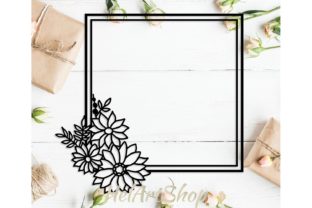
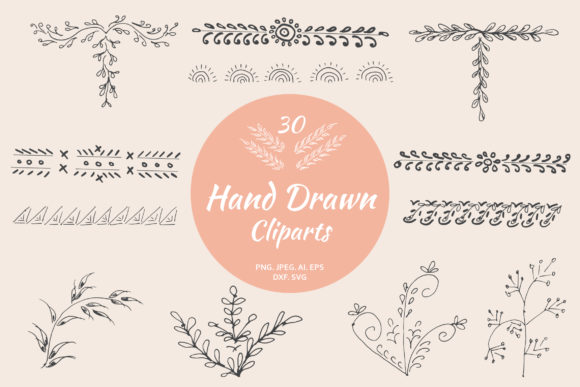
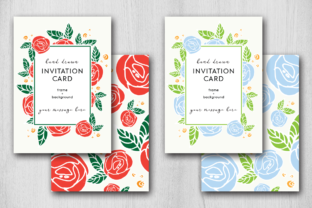
The true value of this collection lies in its modularity. Rather than offering a single, unchangeable layout, these resources include five distinct frames and backgrounds that serve as starting points. Because the core elements are vector-based, you possess complete creative control. You can isolate individual rose buds, leaves, or vine swirls to construct entirely new borders, adjust the color palette to match a specific wedding theme, or scale elements up for large-format printing without losing clarity. This flexibility transforms a simple greeting card template into a comprehensive branding toolkit for stationery designers and event planners.
Technical Specifications for Professional Print Quality
Before diving into creative applications, it is essential to understand the technical foundation of these assets. Professional results require professional specifications, and this collection is engineered to meet industry standards for both digital and offset printing. The standard size is 5 x 7 inches, which is the most versatile dimension for invitation suites, thank-you notes, and announcement cards.
The package includes source files in AI, EPS, and PDF formats. These vectors allow for infinite scaling and precise color manipulation using CMYK profiles for print accuracy. For those who prefer raster workflows or need quick mockups, high-resolution PNG and JPG files are included at 300 DPI with dimensions of 1500 x 2100 pixels. Crucially, the PNG files feature transparent backgrounds. This transparency is vital for layering; it allows you to place a hand-drawn frame over a colored paper texture, a photograph, or a watercolor wash without awkward white boxes disrupting the composition. Understanding these specs ensures that your final output looks as crisp on paper as it does on screen.
Adapting Floral Frames for Wedding Stationery
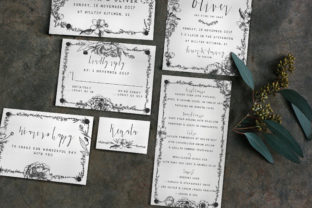
Wedding stationery demands a balance of elegance and readability. A common mistake in floral card design is allowing the ornamentation to compete with the typography. With these hand-drawn rose assets, the solution is strategic placement and color adjustment. Instead of using a full, dense frame, consider deconstructing the vector elements. Place a cluster of roses in the top right corner and a complementary leaf arrangement in the bottom left. This asymmetrical approach creates a natural visual flow that guides the eye toward the center text area, ensuring the couple’s names and event details remain the focal point.
Color adaptation is equally important. While the original artwork may feature classic red or pink roses, many modern weddings utilize muted earth tones, sage greens, or dusty blues. Because these are vector ornaments, you can recolor the entire suite in minutes to match a specific Pantone shade. This capability is particularly useful for designers managing multiple clients simultaneously. You can offer a consistent structural style while delivering a completely unique color story for each couple. Additionally, the 5 x 7 inch format serves perfectly as a save-the-date or invitation, but the separated elements can be resized for matching RSVP cards, envelope liners, and table numbers, creating a cohesive visual identity across all touchpoints.
Commercial Applications for Small Businesses and Marketers
Beyond personal events, hand-drawn florals have significant commercial utility. Boutique owners, beauty brands, and wellness coaches often seek packaging and marketing materials that feel personal rather than corporate. A Hand Drawn Rose Card aesthetic translates beautifully to product tags, certificate borders, and social media announcements. For example, a skincare brand launching a rose-infused line could use the transparent PNG overlays on product photography to emphasize natural ingredients visually.
For freelancers and publishers, these assets streamline production time. Creating original botanical illustrations from scratch is time-consuming and expensive. By utilizing pre-made, high-quality vector frames, you can allocate more time to layout refinement and copywriting. The key to maintaining originality when using shared assets is customization. Never use the frame exactly as provided. Rotate elements, change the stroke weight, combine two different frames, or integrate the roses with geometric shapes. This hybrid approach ensures your client’s brand remains distinctive even when leveraging stock resources. The 300 DPI resolution also ensures these graphics hold up in printed brochures or premium business cards, avoiding the pixelation that damages brand credibility.
Educational and Hobbyist Creative Projects
Educators and hobbyists can leverage these assets to teach design principles or enhance personal projects without needing advanced drawing skills. For art teachers, the vector files serve as excellent study material for understanding line weight, composition, and botanical structure. Students can analyze how the artist balanced positive and negative space within the 5 x 7 inch boundary. They can then practice rearranging the separated ornaments to learn about hierarchy and balance.
For scrapbookers and journal enthusiasts, the transparent PNGs are invaluable. Digital planning communities often struggle to find floral elements that blend seamlessly with digital planner backgrounds. These high-resolution transparent files allow for realistic layering effects in apps like GoodNotes or Procreate. Furthermore, because the files are sized specifically for standard photo prints, hobbyists can print physical versions at home or through local labs to create tangible keepsakes. The hand-drawn nature of the roses adds a tactile quality to digital journals that flat clip art cannot replicate, making memory-keeping feel more authentic and grounded.
Maintaining Clarity and Design Consistency
When working with intricate floral ornaments, there is a risk of visual clutter. To keep your Hand Drawn Rose Card designs effective and audience-friendly, prioritize whitespace. The detailed linework of hand-drawn roses requires breathing room. If you are using a heavy frame, opt for simple, clean typography. Conversely, if your text is ornate or script-heavy, reduce the density of the floral border. This contrast prevents cognitive overload and ensures the message is received clearly.
Consistency across a project suite builds trust and recognition. If you are designing a series of greeting cards or a full wedding suite, establish rules for how the floral elements are used. Perhaps the main invitation uses the full frame, while subsequent cards use only corner accents. Maybe the color saturation is reduced by 20% for secondary items to create subtle hierarchy. Documenting these choices creates a mini style guide that keeps your work organized. Whether you are a professional designer delivering files to a printer or a blogger creating seasonal content, this disciplined approach elevates the perceived value of your work. It demonstrates that the hand-drawn aesthetic is not just decorative, but a deliberate communication tool designed to resonate with your specific audience.