Creating a Cohesive Celebration: The Complete Guide to Rustic Wedding Invitation Sets and Vintage Floral Design
Planning a wedding is an exercise in storytelling. From the moment your guests receive their first notification to the final thank you note sent after the honeymoon, every piece of stationery serves as a chapter in your unique narrative. For couples drawn to warmth, nostalgia, and organic beauty, rustic wedding invitations featuring vintage floral illustrations offer a timeless aesthetic that feels both personal and sophisticated. However, achieving this look requires more than just picking a pretty font; it demands a comprehensive design system.
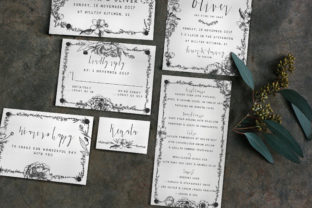
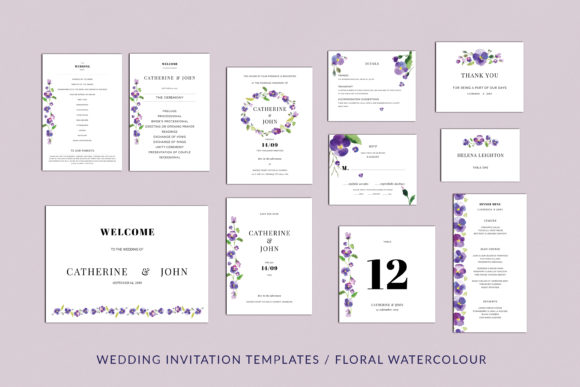
A complete rustic wedding stationery package is not merely a collection of matching papers. It is a curated suite of design assets—including invites, save the dates, RSVP cards, table numbers, escort cards, menu cards, and thank you notes—engineered to work together seamlessly. Understanding how to utilize these professional-grade templates, particularly those designed for Adobe Photoshop with smart object layers, can transform the daunting task of wedding planning into a creative and manageable journey. This guide explores the significance of cohesive design, the technical advantages of layered templates, and how to effectively customize a vintage floral set for your special day.
The Significance of Thematic Consistency in Wedding Stationery
In the context of modern event planning, consistency is the hallmark of professionalism and intentionality. When guests receive a save the date that features delicate watercolor peonies and kraft paper textures, they form an immediate expectation of the event's atmosphere. If the subsequent invitation, menu, and table signage diverge from this style, the visual experience becomes disjointed. A unified rustic theme anchors the guest experience, creating a sense of immersion from the mailbox to the reception hall.
Vintage floral illustrations are particularly effective in this regard because they bridge the gap between classic tradition and contemporary design. Unlike stark minimalism or overly ornate baroque styles, rustic florals possess a versatile softness. They complement outdoor barn venues, industrial loft spaces, and traditional banquet halls alike. By utilizing a pre-designed set where the color palettes, illustration placement, and typography have already been harmonized, couples ensure that their escort cards speak the same visual language as their menu cards. This holistic approach saves time and eliminates the guesswork of trying to match disparate design elements purchased from different sources.
Breaking Down the Essential Stationery Suite
To fully appreciate the value of a complete design package, one must understand the specific function and standard sizing of each component. Professional rustic sets typically adhere to industry-standard dimensions to ensure compatibility with envelopes and printing services.
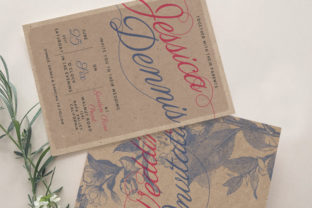
- Wedding Invitations (5x7 inches): The centerpiece of the suite. This size provides ample space for ceremony details, venue information, and the primary vintage floral artwork. A front-and-back design allows for additional information, such as accommodation details or dress codes, without cluttering the main face.
- Save the Date (5x7 inches): Often the first impression, this card mirrors the invitation’s aesthetic but focuses on the date and location. Double-sided printing maximizes value and visual impact.
- RSVP Cards (4.5x3.5 inches): Compact yet functional, these cards facilitate headcount tracking. The included back design is often used for meal selection checkboxes or website URLs for digital responses.
- Menu Cards (4.5x8.5 inches): Tall and elegant, these cards sit at each place setting or on buffet tables. The vertical format accommodates multi-course listings while allowing floral swashes to frame the text beautifully.
- Table Numbers (3x3 inches): Small but vital for navigation. These are designed to be legible from a distance while maintaining the decorative motif.
- Escort Cards (4x2.5 inches): Used to direct guests to specific tables. Their smaller footprint requires efficient use of space, making pre-arranged layers essential for readability.
- Thank You Cards (4.5x3.5 inches): The final touchpoint. Matching these to the RSVP size creates symmetry in the suite and ensures leftover envelopes can sometimes be repurposed.
Technical Excellence: Why File Specifications Matter
For beginners and experienced designers alike, understanding the technical backbone of a wedding template is crucial for avoiding costly printing errors. A high-quality rustic invitation set is built on precise specifications that guarantee professional results.
Resolution and Color Mode
Digital screens display images at 72 DPI (dots per inch) in RGB color, but professional printing requires 300 DPI in CMYK color mode. Using a template that is natively set to these specifications prevents pixelation and color shifting. When you edit a file that is already configured to CMYK, the colors you see on screen are a much closer representation of what will appear on paper. This is especially important for vintage floral illustrations, where subtle gradients in petals and leaves can be lost if converted incorrectly from web formats.
Bleed and Safe Zones
One of the most common misunderstandings in DIY wedding stationery is the concept of "bleed." A professional rustic template includes a 0.25-inch bleed on all sides. This extra margin ensures that when the printer trims the paper, the background texture or floral pattern extends perfectly to the edge without leaving a white border. Furthermore, integrated crop marks and safe line guidelines act as guardrails. They show you exactly where to keep critical text so it doesn't get accidentally trimmed off during the finishing process. These built-in guides remove the anxiety of alignment and spacing.
The Power of Smart Objects and Editable Layers
The true utility of a premium wedding stationery package lies in its layer architecture. Templates requiring Adobe Photoshop CS3 or higher leverage specific features that make customization accessible without requiring advanced graphic design skills.
Smart Object Swashes
Floral swashes and corner illustrations are often complex raster images. In a well-crafted set, these are embedded as Smart Objects. This means you can resize, rotate, or reposition the floral elements without degrading their quality. More importantly, if the set includes multiple variations of a swash, Smart Objects allow you to swap them instantly across all documents. Change the flower arrangement on the master Smart Object, and it updates on the invite, menu, and thank you card simultaneously. This feature alone can save hours of repetitive editing.
Color-Highlighted Organization
Navigating a Photoshop file with dozens of layers can be overwhelming. High-end rustic templates solve this through color-coded layer groups. Text layers might be highlighted in blue, background textures in green, and floral elements in yellow. This visual organization allows users to locate editable areas immediately. Combined with included font download links, this system ensures that you can replace placeholder text with your own details right away, maintaining the original kerning and hierarchy intended by the designer.
Practical Application: Customizing Your Rustic Theme
While the template provides the structure, your personalization brings it to life. Here is how to maximize the versatility of a vintage floral set:
- Typography Pairing: Rustic designs typically pair a script font for names with a serif or sans-serif font for details. Since fonts are included via download link, stick to the recommended pairings initially. If you wish to change them, ensure the new fonts maintain similar x-heights to preserve the layout's balance.
- Paper Selection: The digital file is only half the equation. Rustic themes shine on textured stocks like linen, felt, or recycled kraft paper. Because the template is 300 DPI, fine details in the vintage illustrations will render crisply on these tactile surfaces.
- Adapting for Seasons: Vintage floral sets are often seasonally agnostic. However, you can adjust the color overlay layers in Photoshop to shift the mood. Warm sepia tones evoke autumn harvests, while desaturated blues and greens suggest a spring garden. The editable layers make this color grading non-destructive and reversible.
Common Misunderstandings About Digital Templates
It is important to clarify what a digital template is and is not. A downloadable rustic wedding set is a design foundation, not a finished printed product. Users must have access to compatible software (Photoshop CS3+) and basic computer literacy. Additionally, while the illustrations are high-resolution, they cannot be infinitely enlarged beyond the template's intended size without quality loss. Respecting the 5x7 or 4.5x8.5 boundaries ensures the artwork remains sharp.
Furthermore, some assume that "editable" means every single pixel is changeable. In reality, the hand-painted vintage florals are fixed artistic elements. The customization lies in the arrangement, text, and color treatment. Embracing these constraints actually fosters creativity, forcing a focus on content and layout rather than attempting to redraw professional illustrations from scratch.
Conclusion
A complete rustic wedding invitation set represents the intersection of artistic heritage and modern convenience. By providing a technically sound, aesthetically unified, and easily editable framework, these packages empower couples to create professional-grade stationery that tells their story with clarity and charm. Whether you are designing for an intimate elopement or a grand celebration, understanding the features—from CMYK color profiles to Smart Object layers—ensures that your vintage floral vision translates beautifully from screen to paper. In doing so, you create not just an invitation, but a lasting keepsake that honors the timeless romance of your wedding day.